Agra

Agra

Agra

Weather:  34° C

Best Time: Oct-Mar

Ideal duration: 1-2 days

Nearest Airport: Agra

Home to one of the 7 wonders of the world, the Taj Mahal, Agra is a sneak peek into the design history with other UNESCO World Heritage Sites as Agra Fort and Fatehpur Sikri. History, design, a sentiment all together make the enchantment of Agra and henceforth make for an unquestionable requirement visit for anybody living in or visiting India.

Situated on the banks of waterway Yamuna, History enthusiasts, just as design buffs, can have a great time here with the sheer span of the Mughal workmanship and culture in plain view. Aside from its landmarks, the city likewise makes them energize stuff for foodies – including the renowned Agra ka Petha and stunning chaat and Lassi.

Albeit, be somewhat wary about conmen in the appearance of informal visit aides and phony crafted works.

Taj Mahal:

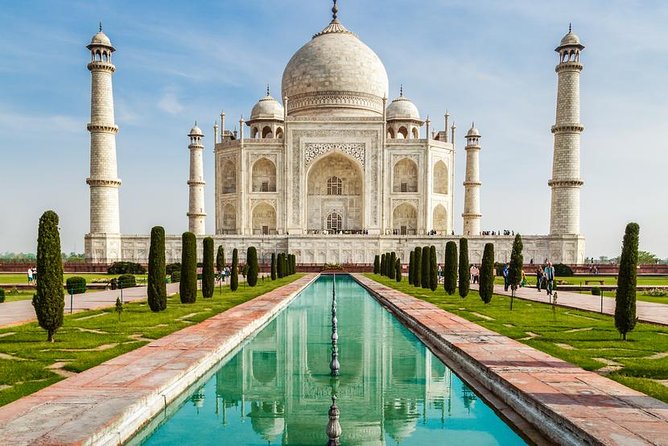
The glorious structure goes back to the seventeenth century. Mughal sovereign Shah Jahan was shattered after his adored spouse, Mumtaz Mahal, died during labor and chose to pay tribute to her with a white sepulcher. Development took over 20 years to finish and required the labor of around 20,000 workers. There will never be an awful time to see the Taj Mahal, however, it merits arriving early-the structure appears to transmit at dawn. Vacationers can enter the UNESCO World Heritage Site through the west and east doors. Once inside, investigate the elaborate gardens, which highlight calming water that mirror the Taj. At that point, head inside the Taj itself and respect its ideal balance and white marble with flower cavings and semiprecious stone decorations.

Touring around the Taj Mahal complex proceeds at the Kau Ban Mosque, west of the Taj, and the Jawab, a structure planned to reflect the mosque and protect the balance on the primary structure’s eastern side. Tip: Hang on to your Taj Mahal ticket-it gives you same-day discounts to other close-by attractions around India, including Fatehpur Sikri and Itimad-ud-Daulah’s Tomb.

Agra Fort:

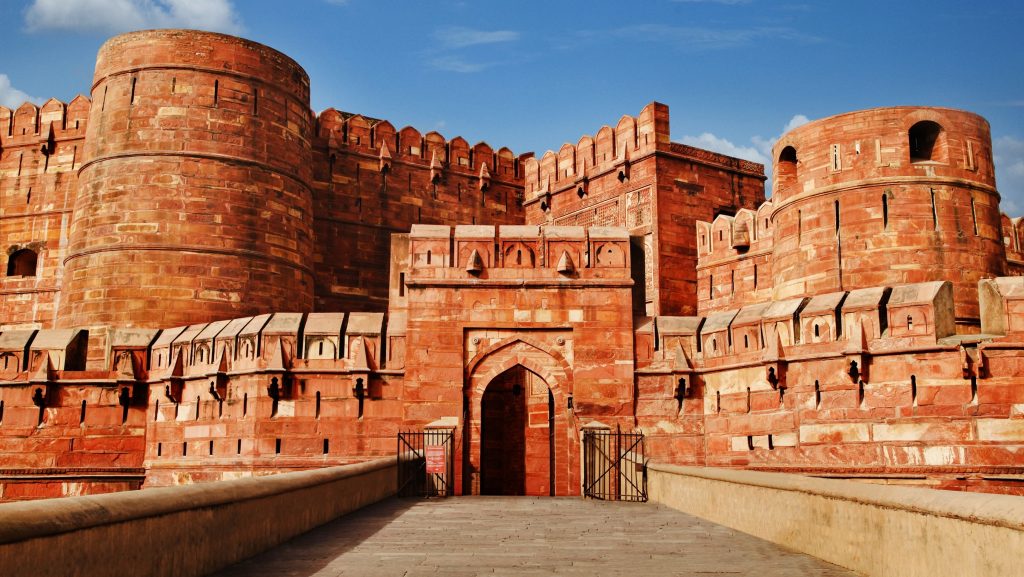
The Taj Mahal isn’t the main UNESCO World Heritage Site in Agra-the city is likewise home to Agra Fort, a centuries-old red sandstone fortress that was at one time the magnificent city for a progression of Mughal rulers. Touring here resembles meandering around a city inside a city. The most uncommon structure at Agra Fort is Jahangir Mahal, a gigantic royal residence that mixes shocking Hindu-propelled highlights (like overhanging enclosed balconies) with Central Asian design components, (for example, the mark pointed curves). Inside, visitors can see the plated focal court where regal ladies once spent their days.

Travelers can likewise look at a scope of other significant structures, including Anguri Bagh (a yard with unique puzzle-like layouts of gardens around water channels), Khas Mahal (a castle with structures made of white marble and red sandstone), Musamman Burj (an octagonal pinnacle with unpredictable marble decorate work), and Diwan-I-Khas (a get-together lobby highlighting a couple of highly contrasting marble positions of authority). With such a great amount to see, Agra Fort will require in any event a couple of hours on your agenda. It makes for an extraordinary evening stop after a morning at the Taj Mahal!


Itimad-ud-Daulah’s Tomb:

On the banks of the Yamuna River is another of Agra’s perfect structures: Itimad-ud-Daulah’s Tomb. The catacomb contains the remaining parts of Mirza Ghiyas Beg, a Persian authority who served the Mughal realm, just as his better half. Legend has it that this adornments box-like tomb was the motivation for the Taj Mahal, procuring it the moniker “Child Taj.” The red sandstone and marble structure highlight 13-meter-high hexagonal towers on each corner.

The most imperative thing about this fascination, however, is that it was the principal structure to utilize pietra dura, the famous Indian trim method that utilizes semiprecious stones to make enriching botanical plans in marble. You’ll see dazzling geometric examples, portrayals of containers and cups, and sensitive rose bundles from floor to roof of the smooth structure-suggestive of those on the Taj Mahal. Despite its magnificence, Itimad-ud-Daulah’s Tomb gets far fewer guests than different attractions around Agra, making it a perfect spot to value the beautiful highlights without the groups.

Mehtab Bagh:

The Taj Mahal nearly appears to reach out over the Yamuna River at Mehtab Bagh (Moonlight Garden), a square nursery complex estimating 300 meters on each side. It’s the main residual park in a progression of about twelve Mughal-fabricated gardens in the region. The recreation center has some quite blossoming trees and hedges a distinct improvement from its state in the mid-1990s when the site was only a hill of sand. The Archeological Survey of India is working diligently re-establishing Mehtab Bagh to its unique greatness by planting Mughal-period plants, so later on; it might turn into Agra’s response to New York City’s Central Park.

The scene adjusts flawlessly with the gardens of the Taj, making it perhaps the best spot in Agra to get a view (or a photograph) of the staggering structure-particularly at nightfall. Outside of the doors to the unpredictable, you can search for Taj Mahal knickknacks and different trinkets from dealers in the region.

Subhash Emporium:

The agile attractions around Agra will make any vacationer begin to look all starry eyed at marble decorate. On the off chance that you get yourself anxious to take a bit of this craftsmanship home with you, head to Subhash Emporium. The boutique has decades-solid notoriety as the go-to place to search for stone craftwork in Agra.

Inside, you’ll discover a huge amount of marble decorates, as botanical liner sets, creature statuettes, little boxes, and light holders. The store likewise sells bigger things, similar to lights, tabletops, and cut marble plate that it can send legitimately to your home. Regardless of whether you would prefer not to shop, it merits swinging by Subhash Emporium for its enamoring exhibitions. The accomplished craftspeople here will show you the exact specialty of trimming little bits of cleaned stone into hard marble-which may cause the significant expenses of these things to appear to be somewhat progressively sensible.

Akbar’s Mausoleum:

For almost 50 years, sovereign Akbar the Great governed the Mughal realm, significantly increasing its domain to incorporate a large portion of the northern portion of the Indian subcontinent. His remaining parts (alongside those of two of his little girls) can be found at what is presently one of the most mainstream vacation destinations in Agra, Akbar’s Mausoleum.

The mind-boggling highlights a grand sandstone and marble tomb with striking marble trim in an assortment of hues. The structure is encompassed by Mughal gardens that are home to deer, gazelle, monkeys, and even a couple of peacocks. On the off chance that you happen to go with a compass, whip it out at this site. You’ll see that the tomb faces east-a difference to about all other Mughal tombs, which highlight Mecca.

Fatehpur Sikri:

Only an hour’s drive from the Taj Mahal, Fatehpur Sikri makes for an advantageous day trip from Agra. The city, when the capital of the Mughal Empire somewhere in the range of 500 years back, was worked by Akbar as a salute to the renowned Sufi holy person, Shaikh Salim Chishti, who precisely anticipated the introduction of a beneficiary. Inhabitants relinquished the city not long after it was fabricated when water supplies ran excessively low.

Visitors would now be able to investigate the all-around safeguarded survives from this red sandstone phantom town, despite everything encompassed by a wall. Look at the Jama Masjid, a mosque and one of the principal structures completed in the city. At that point, investigate the three royal residences, worked for every last one of Akbar’s spouses. They join an assortment of strict enlivened engineering styles that respect the ladies’ spiritualities. Delve in more profound to this mind-boggling site with a visit to the Archeological Museum, close to the Diwan-I-Am primary door. It contains four exhibitions loaded up with treasures from the Mughal time and past, including dim product pot shreds, earthenware lights, smaller than usual human heads in stone, gems molds, and substantially more.


Agra Bear Rescue Center:

Between its respect for dairy animals and its temples committed to explicit animals, India has an interesting relationship with creatures. Be that as it may, few out of every odd convention have been benevolent to four-legged animals. For a large number of years, India’s Kalandar people group has poached sloth bear fledglings, driven a super hot poker and coarse rope through their gags and yanked on the string to compel them to put on agonizing “exhibitions” for a paying crowd. India disallowed brutal practice in 1972. Notwithstanding, the abuse kept leaving basic entitlements activists, for example, Wildlife SOS, to spare the exploited bears.

You can see around 200 of these protected moving bears at Agra Bear Rescue Center. It opens the office to voyagers for three two-hour meetings every day, which incorporate a guided visit; a narrative screening on salvage efforts; and an opportunity to see the bears playing, scrounging, and climbing trees. It’s an endearing encounter, and all returns go toward restoration efforts.

Elephant Conservation and Care Center:

Sloth bears aren’t the main concentration for Wildlife SOS- the creature assurance association likewise deals with mishandled elephants at an asylum only 30 kilometers outside of Agra. On voyages through the office, you can see around 20 safeguarded elephants that had to work in cruel conditions. Fortunate visitors may even be welcome to help get ready lunch for the tusked well-evolved creatures. While you will have different chances to associate with elephants on your outing to India, visiting the Elephant Conservation and Care Center is by a wide margin one of the most moral (and satisfying) approaches to get up near these uncommon animals.

Agra’s Old City:

For a credible glance at the life of Agra’s present-day occupants, take a legacy strolling visit around the Old City. The three-hour journey shows travelers Agra’s design, history, and culture as they meander around the area. You’ll stop by the clamoring discount flavor showcase for a blast of shading and fragrance and see admirers at the goddess temple and a gigantic mosque. The neighborhood guide will likewise give you where to discover extraordinary perspectives on the Taj Mahal, Agra Fort, and Jama Masjid. Also, you’ll get the opportunity to attempt Agra petha, a sweet produced using a wax gourd.

Gurudwara Guru ka Tal:

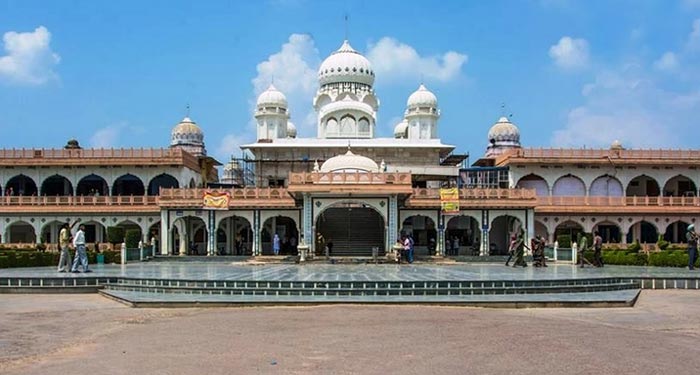
Mughals may have spread Islam all through this piece of India; however the area around Agra is likewise home to a dedicated Sikh people group. Huge numbers of them make journeys to Gurudwara Guru Ka Tal, an otherworldly focus close to Agra. This tranquil spot was worked in the seventeenth century, and current sightseers can see the eight towers that survive from the structure’s unique dozen. Vacationers can likewise appreciate free dinners from the network kitchen-ideal for refueling before an outing back to the city.