
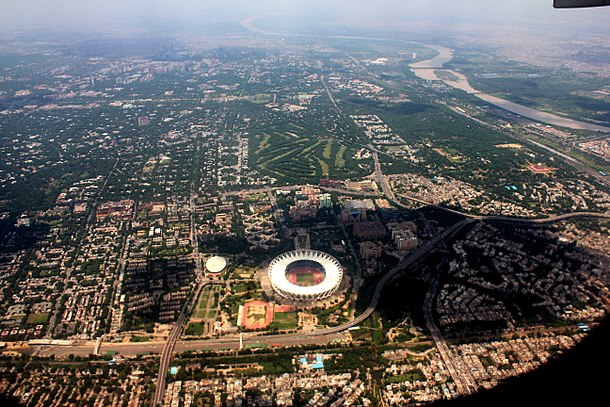
Delhi

Delhi

Delhi

Weather:  37° C

Best Time: October to March

Ideal duration: 3-5 days

The capital of India, Delhi is a cosmopolitan city with a noteworthy old Delhi and the cutting edge New Delhi. From recorded landmarks to swarmed shopping centers, from a broad system of the cutting edge metro framework to Delhi University grounds, Dilli has different characters and is viewed as the city with a heart. Individuals in Delhi love to eat, and sightseers will get themselves spoilt for the decision between a large number of dishes on offer at each side of each road. From kebabs and tikkas to Chhole Bhature, Delhi is a mixture of various societies, and this reality is reflected in the culinary palette of the city.

Set aside an effort to investigate authentic landmarks, for example, the Red Fort, Jama Masjid, Humayun’s Tomb and Purana Qila on the off chance that you need to investigate the Mughal History. Delhi has well-known sanctuaries dispersed the whole way across the city, a couple of significant ones being the Akshardham Temple, the Lotus Temple (otherwise called the Bahai Temple), and the ISKON Temple. The limited, winding paths and bylanes of old Delhi are a demonstration of the previous Mughal rule. Old Delhi houses one of the nation’s most established and busiest markets – Chandni Chowk.

Focal Delhi is the centralization of the nation’s political force, and the must-visit puts here incorporate the Rashtrapati Bhawan on Raisina Hill, the Rajpath, and the India Gate. The best spot to visit this territory is at night, as all the structures are lit up, and you can see the Amar Jawan Jyoti at India Gate sparkling splendidly.

Delhi is a customer’s heaven with some brilliant bazaars and upscale markets. The wide assortment of business sectors in Delhi guarantees that explorers return home with twofold the baggage they accompanied!

Red Fort:

Delhi’s most well-known landmark, the Red Fort, stands not just as an incredible token of the Mughal period India yet, besides, an image of India’s battle for an opportunity. It was work by fifth Mughal sovereign Shah Jahan when he chose to move his capital there from Agra in 1638. The fort’s tempestuous history incorporates being caught by the Sikhs and the British. To return your creative mind to the old-time, a one hour sound and light demonstration of the fort’s history is held each night.

Opening Hours: 9:30 AM to 4:30 PM, plus light shows in the evenings and closed on Mondays.

Jama Masjid:

Jama Masjid is another brilliant fortune of the Old City, and it’s one of the biggest mosques in India. Its patio can hold an amazing 25,000 people. The mosque took 12 years to manufacture and was finished in 1656. A strenuous move to the highest point of its southern pinnacle will compensate you with a staggering perspective (but darkened by metal security flame broils) over the housetops of Delhi. Make certain to dress fittingly when visiting the mosque or you won’t be permitted in. This implies covering your head, legs, and shoulders. Clothing is accessible for rent there.

Chandni Chowk:

Chandni Chowk, the central avenue of Old Delhi, is a stunning differentiation to the wide, efficient lanes of New Delhi. Vehicles, cycle rickshaws, hand-pulled carts, pedestrians, and animals all seek space. It’s turbulent, disintegrating and clogged, yet spellbinding too. As one of the most established and busiest markets in India, its limited winding paths are loaded with cheap adornments, textures, and hardware. For the more courageous, Chandni Chowk is a fantastic spot to test a portion of Delhi’s road nourishment. The eminent Karim’s Hotel, a Delhi feasting organization, is additionally situated there.

Swaminarayan Akshardham:

A generally new fascination, this huge temple complex was worked by the BAPS Swaminarayan Sanstha profound association and opened in 2005. It’s devoted to displaying Indian culture. Just as the bewildering engineering of the pink stone and white marble sanctuary, the complex incorporates rambling nursery, models, and vessel ride. Permit a lot of time to investigate it all together – at any rate, a large portion of a day. Do take note of that phone and cameras are not allowed inside.

Opening Hours: 9.30 AM to 6.30 PM (last entry)and closed on Mondays.

Humayun’s Tomb:

On the off chance that you believe Humayun’s Tomb looks somewhat like the Taj Mahal in Agra that is because it was the motivation for the Taj Mahal’s creation. The tomb was worked in 1570 and houses the body of the second Mughal ruler, Humayun. It was the first of this kind of Mughal engineering to be worked in India, and the Mughal rulers lined it up with a broad time of development everywhere throughout the nation. The tomb is a piece of a more noteworthy complex that is set among lovely gardens.

Lodhi Garden:

Lodhi Garden gives a tranquil retreat from city life, and is the spot to come in case you’re feeling drained and exhausted. The immense gardens were worked by the British in 1936 around the tombs of the fifteenth and sixteenth-century rulers. Joggers, yoga specialists, and youthful couples all appreciate this park.

Opening Hours: Daily from sunrise until 8 PM

 Qutub Minar:

Qutub Minar, one of the tallest block minarets on the planet, is an inconceivable case of early Indo–Islamic engineering. It was worked in 1193, yet the explanation stays a riddle. Some accept that it was made to connote triumph and the start of the Muslim principle in India, while others state it was utilized to call the dedicated to supplication. The pinnacle has five unmistakable stories and is secured with unpredictable carvings and refrains from the heavenly Quran. There are additionally various other notable landmarks on the site.

Gandhi Smriti and Raj Ghat: A visit to Gandhi Smriti will show you the specific spot where Mahatma Gandhi, lovingly alluded to as the Father of the Nation, was killed on January 30, 1948. He lived in the house for 144 days up until the hour of his passing. The room that he snoozed kept precisely how he left it, and the supplication ground where he held a mass assembly every night are both open to people in general. A lot of photographs, figures, artistic creations, and engravings are likewise in plain view. You can likewise visit his dedication to Raj Ghat.

Opening Hours: 10 AM to 5 PM and closed on Mondays.

India Gate:

The transcending opening of India Gate at the focal point of New Delhi is a war dedication, worked in memory of the Indian troopers who lost their lives battling for the British Army in World War I. Around evening time it gleams heartily under floodlights, and the nurseries that line its avenue are a well-known spot to appreciate a warm summer’s night. There’s additionally an enjoyment Children’s Park that is perfect for kids.

Opening Hours: Always open.

Bahai (Lotus) Temple:

The Bahai Temple is regularly called the Lotus Temple, as it’s molded like a lotus bloom. It’s especially beautiful around evening time when it’s alluringly lit up. Made out of cement shrouded in white marble, the temple has a place with the Bahai Faith, which declares the solidarity surprisingly and religions. Everyone is welcome there.

Opening Hours: 9:00 AM until 5:30 PM and closed on Mondays